What Is DX? Why Is It Important? A Simple Guide to the Differences Between DX, Digitalization, and IT Adoption
In recent years, DX (Digital Transformation) has become increasingly important in business management. However, many people still have questions such as: “What is DX?”, “How is it different from IT adoption or digitalization?”, and “Why is DX so important today?”. In this article, we'll explain the fundamentals of DX, why it matters, how it differs from digitalization and IT adoption, as well as its benefits, implementation process, and the key factors for successful digital transformation.
DX is more than simply implementing new IT tools. It is the process of leveraging digital technologies and data to transform business processes and business models, creating new value and establishing a competitive advantage.
What Is DX?

DX stands for Digital Transformation. It refers to the use of digital technologies and data to transform business processes, business models, and even organizations and society as a whole, creating new value.
The essence of DX goes beyond improving operational efficiency or implementing IT systems. It lies in enhancing customer experience and creating new services and business models to strengthen a company's competitive advantage.
Therefore, DX is not solely the responsibility of the IT or information systems department. It requires the entire organization—from top management to frontline employees—to work together in driving digital transformation.
Definition of DX
Although there is no single, universally accepted definition of DX, it is generally understood as follows:
Leveraging digital technologies to adapt to changes in the external environment, transform organizations and business operations, deliver new value to customers, and build a competitive advantage.
In other words, DX is not simply about adopting digital technologies—it represents the transformation of the business itself.
Why Is DX Necessary?

The growing emphasis on DX in recent years is driven by significant changes in the business environment surrounding Japanese companies.
As Japan's domestic market matures, labor shortages caused by an aging population and declining birthrate become more severe, and global competition continues to intensify, relying solely on traditional business practices is no longer enough to achieve sustainable growth. In this environment, DX has become an essential approach for improving operational efficiency and creating new value.
To Remain Competitive in the Global Market
Japanese companies are no longer competing solely with domestic businesses. In the global marketplace, companies from the United States, China, India, and many other countries are achieving remarkable growth by leveraging cloud computing, AI, and data.
In today's rapidly changing business environment, digital transformation powered by digital technologies has become essential for Japanese companies to maintain and strengthen their competitiveness.
Addressing the "2026 Digital Cliff"
One of the biggest obstacles to DX adoption among Japanese companies is the “2026 Digital Cliff.” It refers to the risk that outdated core systems, a shortage of IT talent, and rising maintenance costs could significantly undermine business growth and competitiveness.
Aging Legacy Systems
Many companies continue to rely on core systems that have been in operation for many years. Over time, these systems have become outdated, increasingly complex, and difficult to understand due to their “black box” nature. As a result, integrating them with new systems has become challenging, hindering operational improvements and the development of new business initiatives.
Shortage of IT Talent
Many organizations face a shortage of both professionals who can maintain and operate legacy systems and advanced IT talent capable of leveraging technologies such as cloud computing and AI. This talent shortage is one of the major factors making DX implementation more difficult.
Rising Maintenance and Security Costs
Continuing to rely on aging systems leads to rising maintenance, operational, and security costs. As a result, budgets that could otherwise be invested in business growth are instead consumed by maintaining existing systems.
The Difference Between Digitalization, IT Adoption, and DX
To properly understand DX, it is important to distinguish it from digitalization and IT adoption.
What Is Digitalization?
Digitalization is the process of converting tasks that were traditionally performed on paper or manually into digital data. For example, replacing paper application forms with electronic forms, managing information in Excel, or converting paper documents into PDF files are all examples of digitalization.
This is the first step toward DX.
What Is IT Adoption?
IT adoption refers to implementing IT systems and tools into digitalized business processes to improve operational efficiency and productivity. For example, introducing a sales management system, an accounting system, or a workflow management system to streamline internal operations is considered IT adoption.
What Is DX?
DX goes beyond digitalization and IT adoption. Rather than focusing solely on improving operational efficiency, it aims to leverage digital technologies to transform how businesses create and deliver value, as well as reshape their business models to provide customers with new value and experiences.
What Does DX Aim to Achieve?
DX is not about making incremental improvements to existing business practices. Instead, it aims to uncover customer needs that have yet to be recognized, create entirely new value and experiences, and build a strong competitive advantage in the marketplace.
To achieve this, it is not enough to simply digitalize internal operations. Organizations must work together—from top management to frontline employees—and continuously ask, “What do our customers and society truly need?”
The Current State and Trends of DX
Japanese companies have been making steady progress in adopting DX year by year. However, many small and medium-sized enterprises (SMEs) have yet to make sufficient progress due to reasons such as not fully understanding the benefits of DX, lacking the necessary knowledge and information, or facing a shortage of qualified personnel.
Successfully driving DX requires more than simply introducing digital tools. Organizations must clearly define their objectives, develop their workforce, and secure continuous investment to support their transformation efforts.
Five Benefits of DX

Driving DX brings a wide range of benefits to businesses.
Improved Operational Efficiency and Productivity
DX enables organizations to fundamentally redesign their business processes while promoting automation and labor-saving initiatives. As a result, employees are freed from repetitive routine tasks and can focus on higher-value work.s
Cost Reduction
By leveraging cloud services and digital tools, organizations can optimize system operating costs, capital investment, and maintenance expenses. In addition, improving efficiency in manufacturing, logistics, and inventory management helps reduce unnecessary costs.
Enhanced Security
By adopting the latest digital technologies and cloud services, organizations can achieve a higher level of security than with aging legacy systems. This not only strengthens business continuity but also enhances customer trust.
Accelerating Innovation
The time, workforce, and budget saved through improved operational efficiency can be reallocated to developing new products and services or expanding into new business areas. This helps create an environment that fosters innovation.
Deliver New Value to Customers
By leveraging the data accumulated and the new systems established through DX, organizations can deliver personalized services tailored to each customer while providing enhanced and more engaging customer experiences.
DX Case Studies and Implementation Guide
Digital Transformation cannot be achieved overnight. It is important to start with small improvements and gradually expand them into organization-wide transformation.
DX Case Studies
- Many small and medium-sized enterprises (SMEs), as well as mid-sized companies, have achieved significant results through DX implementation.
- A Food Service Business That Significantly Increased Revenue and Profit by Enhancing Customer Traffic Forecasting Through Data Utilization.
- A Manufacturing Company That Improved Productivity and Advanced Organizational Transformation by Implementing a Production Management System.
- A Logistics Company That Eliminated Knowledge Dependency by Migrating Dispatch Operations to the Cloud.
- What these case studies have in common is that they view DX not simply as a system implementation, but as a comprehensive transformation driven by the organization's strategic vision.
How to Implement DX
DX implementation is generally carried out through the following steps.
Decision-making
Senior management should recognize the importance of DX and establish a clear vision and strategic direction to guide the digital transformation journey.
Develop an Overall Strategy and Transform Organizational Mindset
Engage the entire organization in building a solid foundation for transformation.
Full-Scale Implementation
Organizations review and optimize business processes, leverage data effectively, and implement appropriate systems to accelerate digital transformation.
Scale and Realize
Transformation extends beyond internal operations to customer touchpoints and the entire supply chain, creating value across the entire business ecosystem.
DX is not a one-time implementation. It requires continuous monitoring, evaluation, and improvement to deliver sustainable value.
7 Key Success Factors for DX

To achieve successful DX implementation, organizations should focus on the following key points.
Leadership Commitment from Management
DX is an initiative that transforms the very way a business is managed and operated. Therefore, strong commitment and determination from top management are essential for its success.
Adopt a Medium- to Long-Term Perspective
DX is not solely about achieving short-term results. Organizations should take a long-term approach, planning with a five- to ten-year horizon to create sustainable value.
Start Small and Build on Early Successes
Rather than aiming for a large-scale transformation from the outset, organizations should begin with practical improvements to everyday business processes.
Leverage Data to Create New Value
Simply collecting data is not enough. It is essential to analyze and leverage data effectively to support decision-making and drive continuous improvements in products and services.
Develop Human Resources
Organizations should develop talent capable of driving DX while leveraging external expertise when necessary to strengthen capabilities and accelerate the transformation process.
Continuously Expand and Drive Transformation
DX is not a one-time initiative, but an ongoing transformation that should be pursued continuously over the long term.
Leverage External Support
Effectively leveraging IT vendors, support organizations, and government subsidy programs can also help accelerate DX implementation.
List of Government Policies and Subsidy Programs for Corporate DX
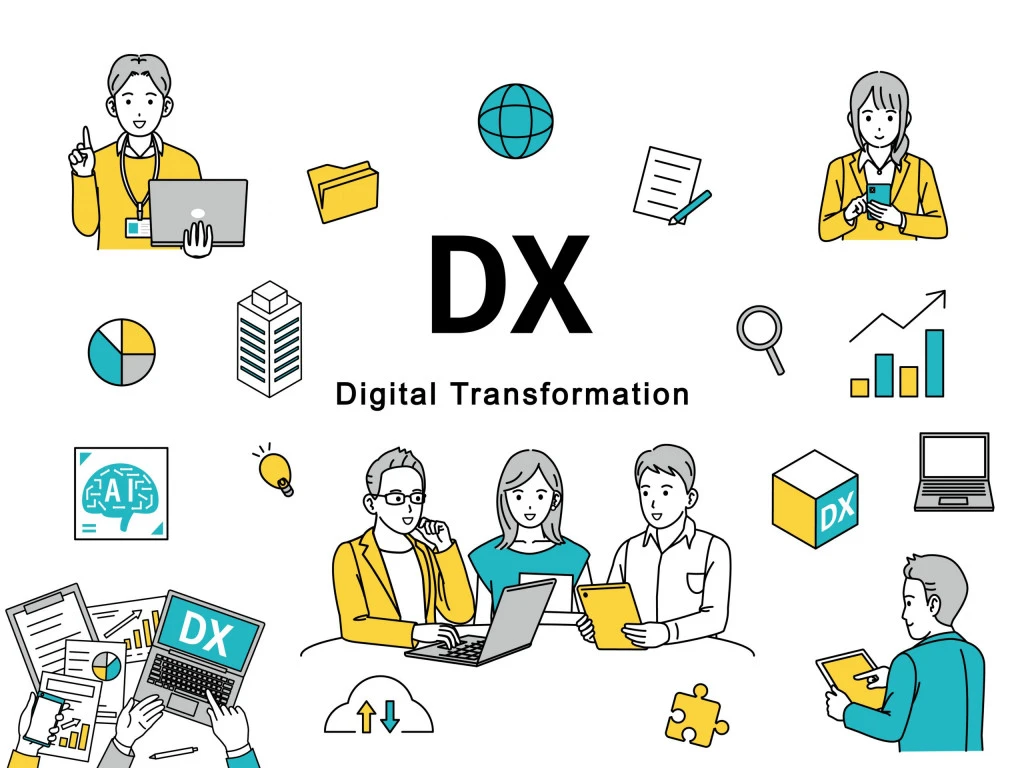
To support businesses in advancing DX, various support programs and assistance measures have been made available.
Key solutions and services include:
- Digital Governance Code
- DX Promotion Indicators
- DX Certification Program
- DX Selection
- Digital Skills Standard (DSS)
- Digital Talent Development Platform
- IT Implementation Subsidy
- Manufacturing Innovation Subsidy
- Labor-Saving Investment Subsidy Program
- Tax Incentive Program for Strengthening SME Management
- Growth Investment Subsidy Program for Small and Medium-Sized Enterprises
- Regional Digital Transformation Support Promotion Program
※ The details of subsidy programs, support schemes, application periods, and eligibility requirements may change. Therefore, we recommend checking the latest information before referring to or applying for these programs.
Conclusion

DX (Digital Transformation) is the practice of leveraging digital technologies to transform business processes and models, ultimately delivering new value and experiences to customers. Therefore, unlike simple digitization or IT implementation, DX requires a unified effort toward transformation, driving alignment from executive leadership to frontline staff.
The business environment for Japanese companies is set to undergo even more drastic changes, driven by an aging population, labor shortages, and intensifying global competition. In this landscape, embracing DX is no longer optional—it is an absolute necessity for companies seeking sustainable growth.
To begin with, it is crucial for companies to reassess their current state and take that first step toward DX, even through minor improvements. Accumulating these continuous transformations will ultimately pave the way for a powerful competitive advantage in the future.
If you are considering driving your digital transformation (DX) forward, contact SMILE today for professional consultation.
At SMILE, we offer a comprehensive suite of solutions to drive your company’s digital transformation. We provide end-to-end support—from analyzing operational challenges and system planning, design, and development, to continuous operational improvement—delivering tailored DX solutions that perfectly align with your specific business needs and industry characteristics.
Our expertise goes beyond streamlining existing operations and modernizing business systems; we provide extensive support in cloud adoption, data integration, workflow optimization, and legacy system modernization. At SMILE, we do more than just implement software—we empower your business to achieve a true digital transformation that drives long-term, sustainable growth.
Start a Consultation on GX and DX Initiatives
From assessing your current situation to implementing systems and improving operations, we work with you to design an approach that fits your company’s needs.
- We can help clarify issues in your current operations and data.
- You can design implementation steps that fit your organization’s structure.
- You can continue building a framework that remains easy to operate after implementation.
- You can use data to verify results and make ongoing improvements.
- You can start exploring AI and IoT applications in the areas where they are most needed.