What SX Means for Small and Medium-Sized Manufacturers Today: A Clear Guide to the Concept, Its Importance, and Practical Steps
Why SX Is Gaining Attention Among Small and Medium-Sized Manufacturers Now
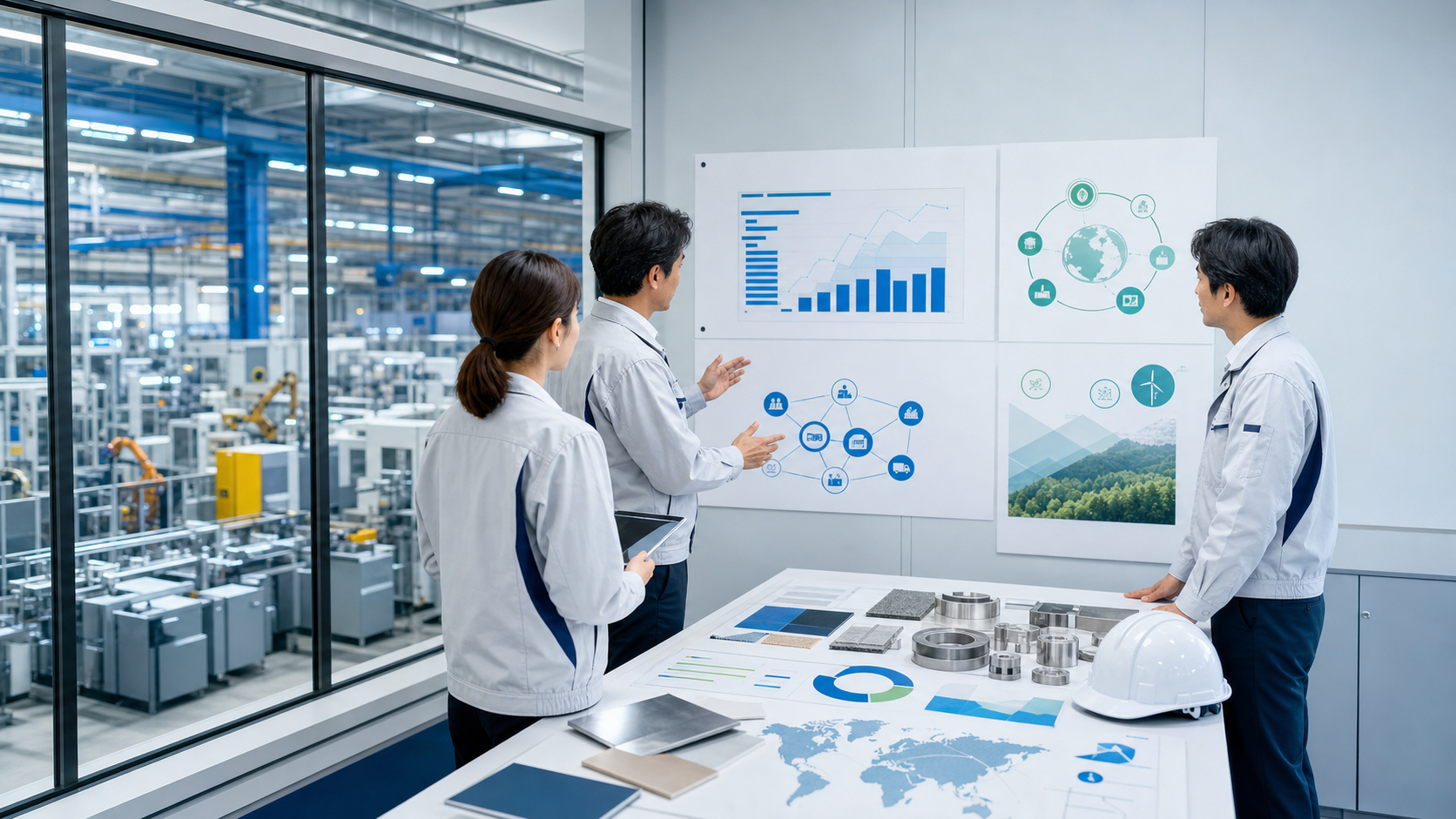
The business environment surrounding small and medium-sized manufacturers is changing significantly, driven by factors such as fluctuating raw material prices, rising energy costs, labor shortages, governance requirements from business partners, and supply chain restructuring.
In the past, many companies could remain competitive simply by improving quality, delivery times, and pricing. Today, however, that is no longer enough. To keep a business sustainable over the long term, companies need to reassess not only environmental initiatives, but also work styles, supplier and customer relationships, technology transfer, and management transparency.
Against this backdrop, SX has emerged as a concept attracting growing attention. Interest in SX is increasing particularly among small and medium-sized manufacturers, where it offers a way to build a sustainable management foundation with limited personnel and equipment.
What Is SX?
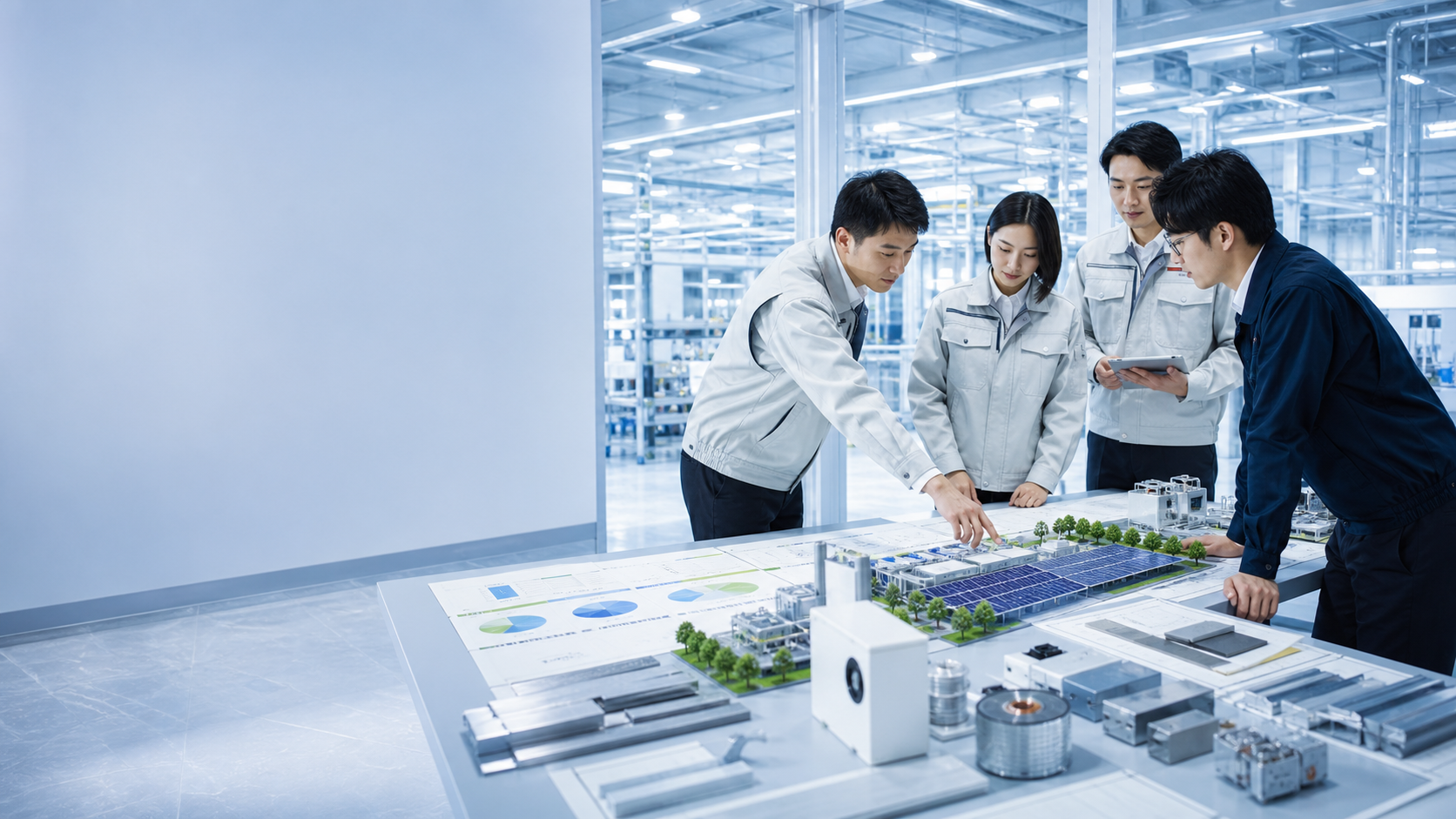
SX stands for Sustainability Transformation. It refers to rethinking management principles and business operations in light of social and environmental changes so that companies can continue to grow over the long term.
The important point is that SX does not refer only to environmental initiatives. Energy saving and decarbonization are only part of it. In practice, SX also includes business challenges such as the following.
- Reduce revenue dependence on specific customers
- Rethink On-Site Operations That Depend Heavily on Individuals
- Build a structure that enables the transfer of skills and know-how
- Prepare for risks in suppliers and supply systems
- Create a Better Workplace to Attract and Retain Talent
- Make investment decisions with the future in mind
In other words, SX is best understood as a management transformation aimed at making the company sustainable.
How SX Differs from DX, GX, and the SDGs
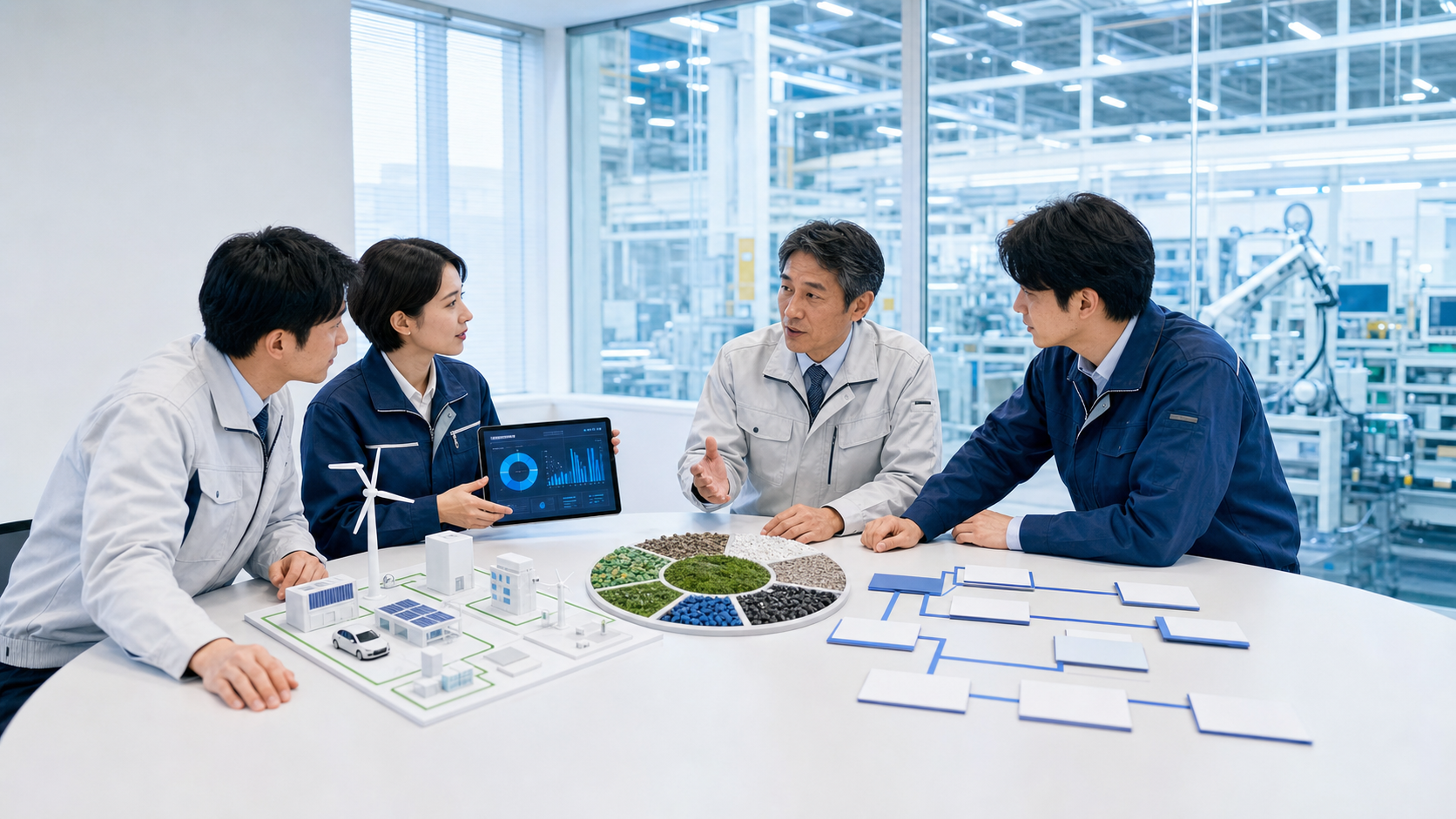
Because SX is often confused with related terms, it is important to clarify the differences.
How it differs from DX
DX refers to initiatives that use digital technologies to transform operations and business models. Examples include visualizing production management, digitizing paper forms, and using equipment data.
SX, on the other hand, is a management transformation aimed at improving the sustainability of the entire company. DX can be considered one of the most effective ways to advance SX.
How It Differs from GX
GX is a transformation centered on decarbonization and the energy transition. Typical examples include improving energy efficiency in factories, using renewable energy, and tracking CO2 emissions.
SX has a broader scope than GX. It covers not only the environment, but also talent, supply chains, revenue models, and governance.
How SX Differs from the SDGs
The SDGs are goals for society as a whole. SX is a practical approach in which companies respond to that broader movement by transforming how they manage their businesses. SX means going beyond simply endorsing the SDGs and embedding them into real management decisions and day-to-day operations.
Why SX Matters for Small and Medium-Sized Manufacturers
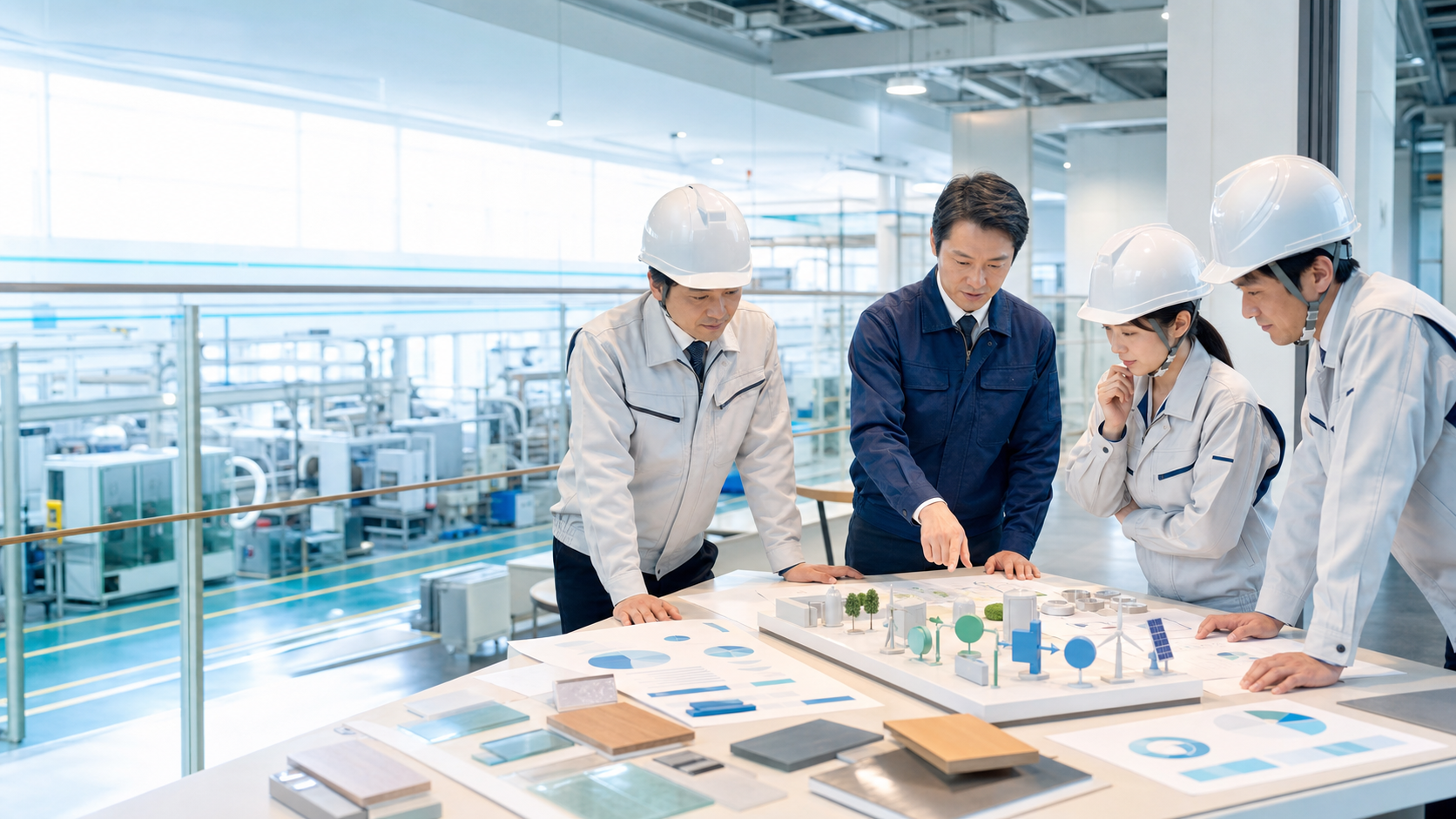
There are good reasons why small and medium-sized manufacturers, in particular, cannot afford to put SX off.
1. Heavy reliance on specific customers or industries
For companies that rely on a small number of customers for a large share of their sales, changes in trading terms or reduced orders can directly become management risks. Business partners are also moving to avoid over-concentration among suppliers from the standpoint of BCP and procurement diversification.
2. Serious labor shortages and challenges in transferring technical expertise
In workplaces that rely heavily on skilled employees, retirements and hiring difficulties can create business continuity risks. Companies need to standardize work processes, make better use of data, and establish structured training systems.
3. High exposure to fluctuations in energy and raw material costs
Many small and medium-sized enterprises find it difficult to pass rising costs on to customers, making increases in electricity and raw material costs more likely to squeeze profits. In addition to saving energy, it is important to improve cost visibility and review investment decisions.
4. Growing accountability requirements from business partners
Major companies in particular are increasingly checking whether their suppliers have appropriate practices in place for environmental responsibility, information management, labor systems, BCP, and related areas. Going forward, the gap may widen between companies that can meet these requirements and those that cannot.
Examples of SX in Practice at Small and Medium-Sized Manufacturers
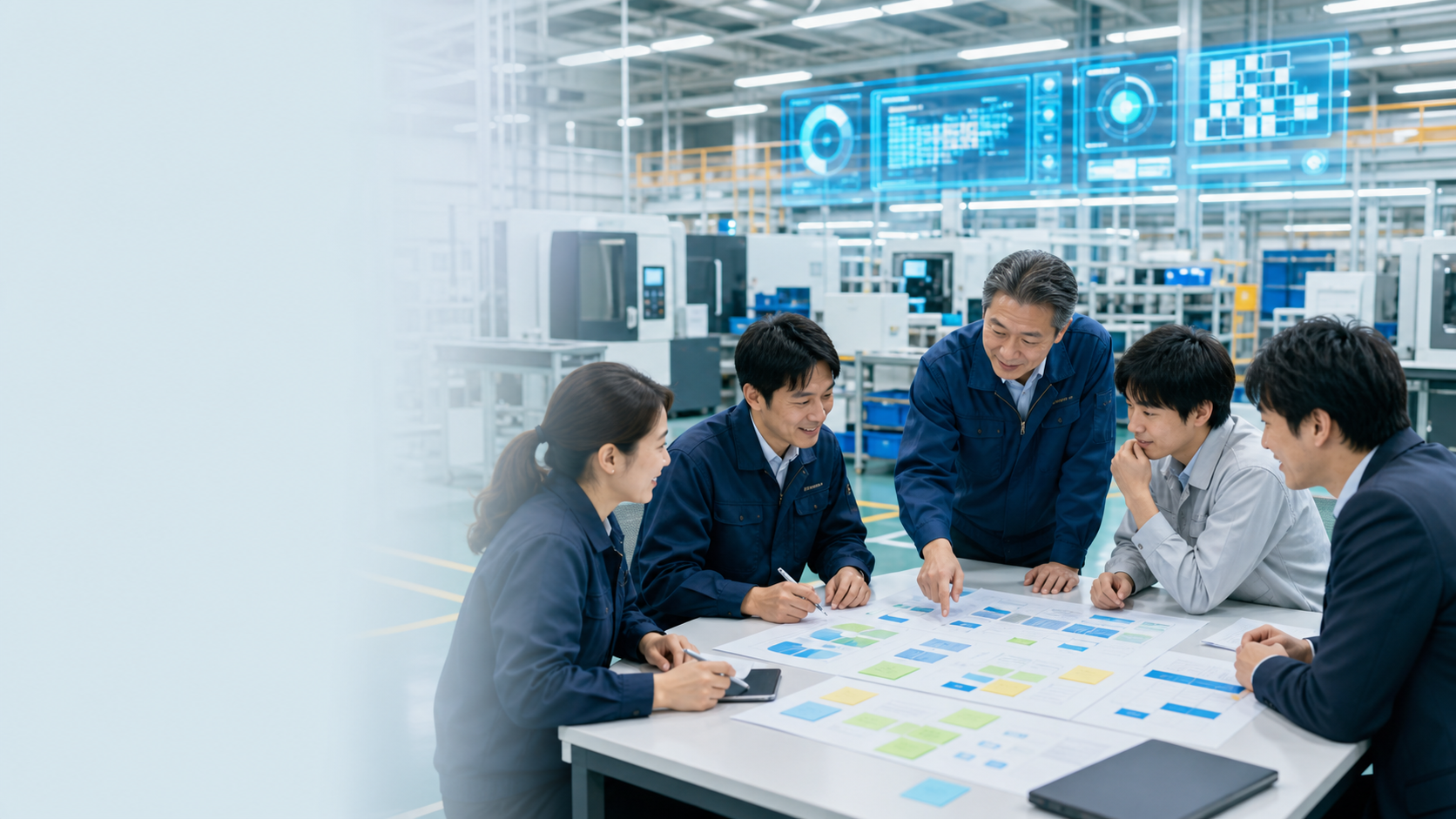
SX may seem abstract, but in practical business terms it translates into initiatives such as the following.
Visualizing and standardizing production sites
Move records of equipment operation and defects from paper to digital formats to reduce reliance on individual judgment. This improves consistency on the shop floor and makes training easier.
Prioritizing energy savings and equipment upgrades
Rather than upgrading everything at once, start by improving equipment with the highest electricity consumption. This makes the return on investment easier to see and helps gain buy-in from the shop floor.
Diversification of suppliers and sales channels
To reduce dependence on specific companies, businesses should diversify procurement routes and sales channels. Trade shows, web-based lead generation, and applying existing technologies to new markets can also be effective.
Systematizing skill transfer
Capture the tacit knowledge of experienced employees in manuals, videos, and checklists, and incorporate it into training workflows. This makes it easier to maintain quality even when personnel change.
Define KPIs that connect operations with management
Organize metrics such as on-time delivery rates, defect rates, equipment downtime, energy intensity, and employee turnover into a format that can be reviewed continuously at management meetings. SX should not remain just a concept; it is important to translate it into concrete management indicators.
Benefits of Pursuing SX
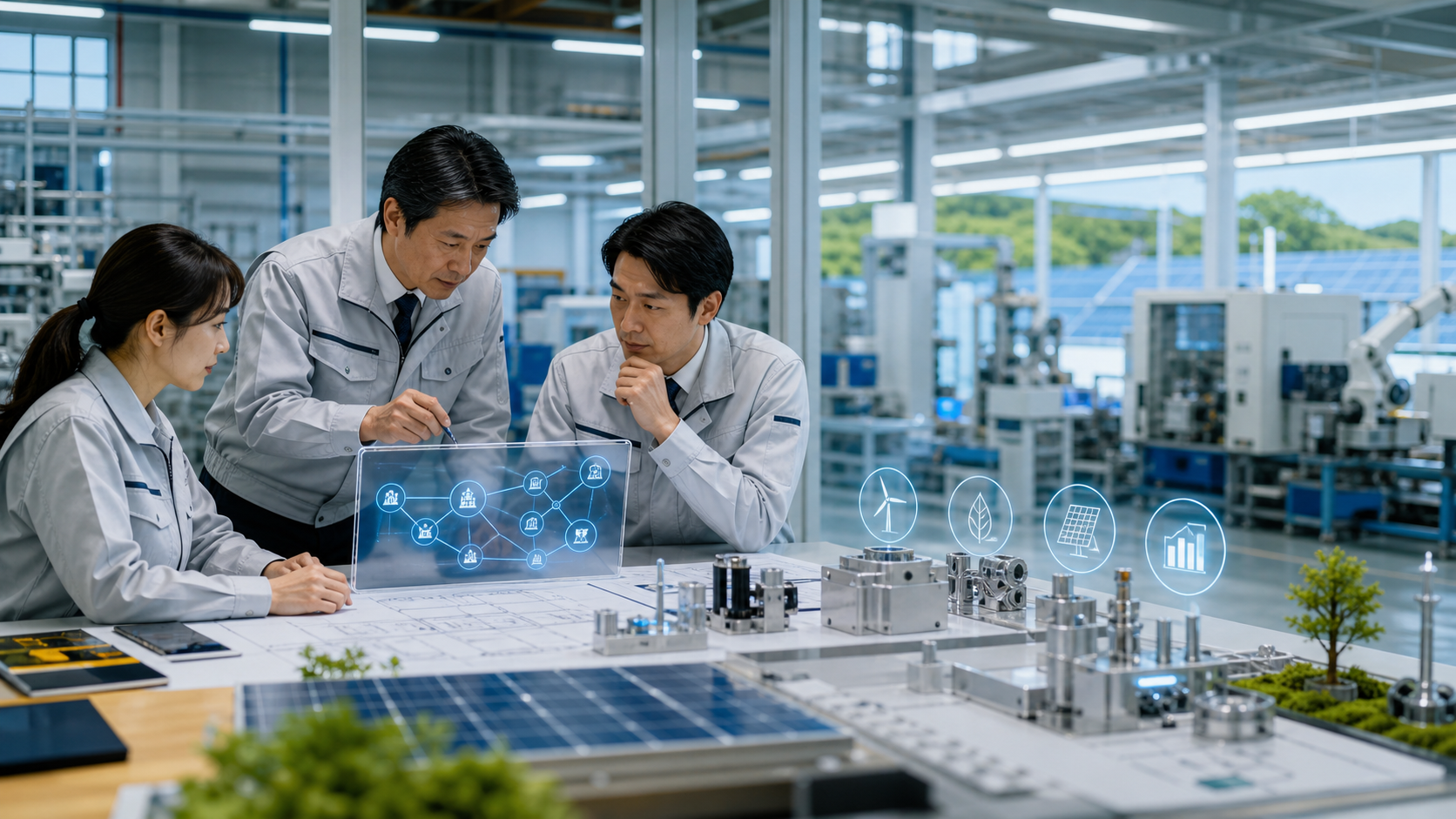
By pursuing SX, small and medium-sized manufacturers can expect benefits such as the following.
- Identify management risks earlier and more easily
- It helps build greater trust with customers and business partners
- Reduce dependence on specific individuals and make stable production easier to achieve
- Review and strengthen profitability through energy savings and operational improvements
- It Helps Improve Recruitment and Employee Retention
- It becomes easier to make future investment decisions.
SX is not a branding exercise; it is a practical initiative that strengthens a company’s ability to keep operating over the long term.
Key points to keep in mind when moving forward
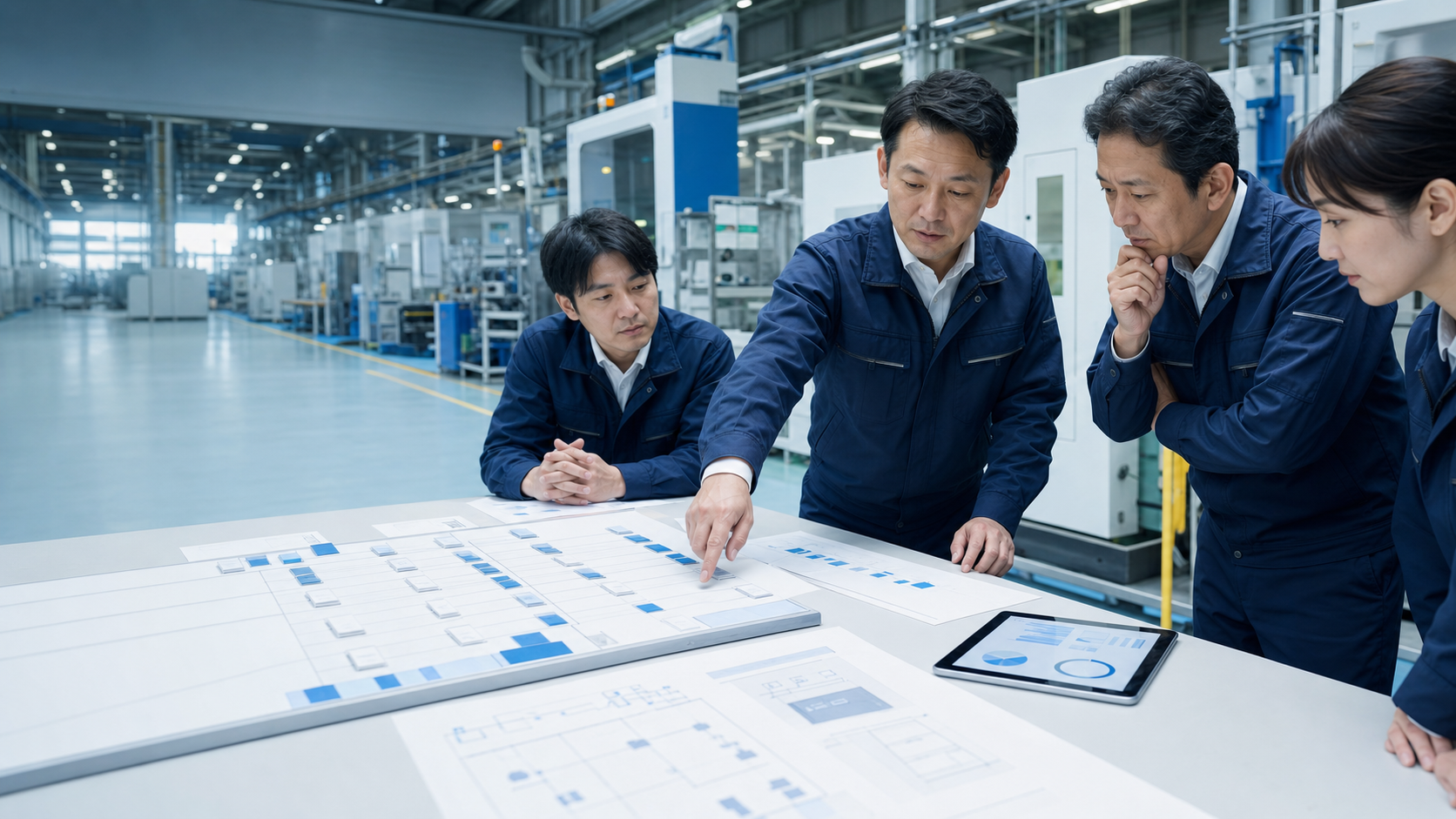
On the other hand, if the approach is handled poorly, it can end up increasing the workload on the shop floor without delivering meaningful results.
Do not let terminology lead the discussion
If using the term SX becomes an end in itself, it will not take root on the front lines. Companies should start with their own business challenges first.
Do not expand too much at once
When environmental initiatives, DX, workforce development, and procurement are all pursued at the same time, small and midsize companies may struggle to keep up. A more practical approach is to set priorities and start small.
Do not proceed without involving frontline teams
Even if leadership sets the policy, it will not be sustained unless it fits day-to-day operations on the shop floor. It is important to align understanding among operators, managers, and executives.
Measure results with data
Unless improvement activities are tracked using metrics such as time saved, defect rates, downtime, and electricity consumption, it becomes difficult to decide whether to continue them.
How Small and Medium-Sized Manufacturers Can Implement SX
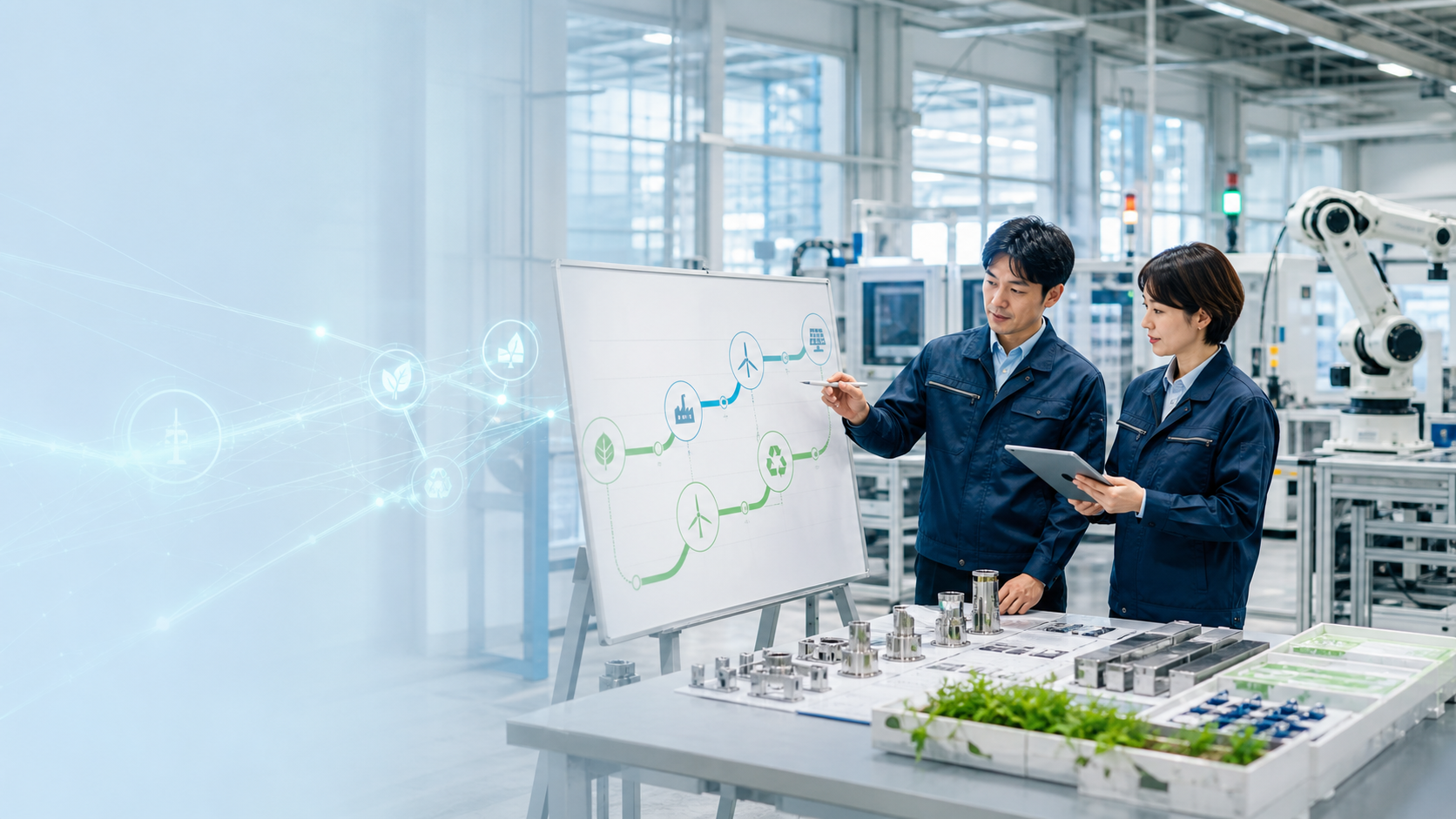
Here are the basic steps for getting started in a practical, manageable way.
Step 1. Identify Your Company’s Sustainability Risks
Start by assessing your current situation from perspectives such as customer concentration, workforce, aging equipment, procurement, information management, and energy costs.
Step 2. Narrow Your Priorities to One or Two Key Themes
For example, choose a small set of related themes, such as technology transfer and production visualization, or energy savings and cost management.
Step 3. Define Metrics That Can Be Measured on the Shop Floor
Define metrics that can be compared before and after improvements, such as defect rates, overtime hours, setup time, equipment downtime, and electricity consumption.
Step 4. Start with a small-scale trial
Start with a limited scope, such as one production line, one process, or one department. Building a proven success model before expanding helps reduce the risk of failure.
Step 5. Reflect the results in management decisions
Based on the trial results, reflect the findings in priorities for capital investment, workforce allocation, sales strategy, and IT implementation. SX becomes true management transformation only when it is connected this far.
How SMILE Can Help
Advancing SX requires both a management perspective and an on-site operational perspective. SMILE supports phased implementation, from identifying business issues and considering systemization to development and operations.
For example, the following types of support are available.
- Organizing on-site operations and making issues visible
- Improving information management for production, inventory, costs, and quality
- Review operations that rely heavily on paper and Excel
- Standardizing and systematizing operations to support skill transfer
- Planning Small-Scale Implementations to Advance DX
Companies considering DX or the use of AI should start with small operational improvements.
Conclusion
SX is not a management theme reserved for large corporations. In fact, the concept of SX is especially important for small and medium-sized manufacturers as they address challenges such as customer concentration, labor shortages, rising energy costs, and supply chain risks.
The key is not simply to state a vision, but to identify what needs to change to improve your company’s sustainability and put those changes into action on a small scale. When DX and GX are positioned within the broader perspective of SX, it becomes easier to set priorities.
To build a stronger manufacturing floor for the future, why not start by making your company’s challenges visible?
FAQ
Q1. Is SX necessary for small and medium-sized enterprises?
Yes. In fact, the perspective of SX is especially important for small and medium-sized companies that need to ensure business continuity with limited talent and resources.
Q2. Are SX and DX the same?
They are not the same. DX refers to transformation through the use of digital technologies, while SX is a management transformation that enhances the sustainability of the entire company. DX is one of the tools that supports SX.
Q3. Where should we start?
A good place to start is by identifying risks to business continuity, such as customer concentration, labor shortages, aging equipment, and energy cost burdens.
Start a Consultation on GX and DX Initiatives
From assessing your current situation to implementing systems and improving operations, we work with you to design an approach that fits your company’s needs.
- We can help clarify issues in your current operations and data.
- You can design implementation steps that fit your organization’s structure.
- You can continue building a framework that remains easy to operate after implementation.
- You can use data to verify results and make ongoing improvements.
- You can start exploring AI and IoT applications in the areas where they are most needed.