What Is the GX Promotion Act? A Clear Explanation of How It Relates to Businesses
Although the term decarbonization is being heard more often, many companies on the ground still feel that it is hard to see how it relates to their own business, or that it seems like an issue only for large corporations.
Meanwhile, with fluctuating energy prices, growing environmental requirements from business partners, and evolving procurement standards, GX is already becoming part of everyday business management and operations. This makes it important for organizations to understand the GX Promotion Act.
The GX Promotion Act is more than just a law to reduce greenhouse gas emissions. It establishes a framework for gradually transforming Japan's industrial structure while balancing three key objectives: decarbonization, economic growth, and a stable energy supply.
What Is the GX Promotion Act?

The GX Promotion Act is formally known as the Act on Promotion of a Smooth Transition to a Decarbonized, Growth-Oriented Economic Structure. Enacted in 2023, it has become one of Japan’s key policy frameworks for achieving carbon neutrality by 2050.
The Cabinet Secretariat’s GX Implementation Council defines GX as an initiative to shift fossil fuel-centered economic, social, and industrial structures toward clean energy. In other words, the GX Promotion Act is not only an environmental policy measure but also a law closely connected to industrial, investment, and energy policy.
This is driven by the emissions reduction targets set by the Japanese government. According to information published by the Ministry of Foreign Affairs, Japan aims to reduce emissions by 46% from fiscal 2013 levels by fiscal 2030, while continuing its efforts toward the higher goal of 50%. In addition, in February 2025, the Cabinet approved an NDC targeting a 60% reduction by fiscal 2035 and a 73% reduction by fiscal 2040.
Why the GX Promotion Act Matters Now

There are three main reasons why the GX Promotion Act is considered important.
Decarbonization is becoming a fundamental requirement for business activities
In the past, many companies treated environmental initiatives as part of CSR. Today, however, decarbonization has become closely tied to business continuity across procurement, investment, financing, exports, and supply chain management.
Stable energy supply is a key management issue
GX is not only about introducing renewable energy. It is also important to consider how to secure a stable supply while reducing the risks of fluctuating energy prices and dependence on overseas resources. In February 2025, the Agency for Natural Resources and Energy approved the Seventh Strategic Energy Plan by Cabinet decision, showing that GX and energy policy are moving forward together.
The impact on companies is expected to expand going forward
Even if only certain businesses are directly covered by the regulations, the practical impact will extend across the entire supply chain. As large companies strengthen emissions management and renewable energy procurement, their business partners may increasingly be asked to submit data and make improvements.
Core Mechanisms of the Law

The GX Promotion Act establishes several mechanisms to support both decarbonization and growth.
Developing and Reviewing a GX Promotion Strategy
To advance GX in a comprehensive and planned manner, the government formulates the GX Promotion Strategy and revises it as circumstances require. In addition to the 2023 GX Promotion Strategy discussed by the Cabinet Secretariat’s GX Implementation Council, the GX2040 Vision was approved by the Cabinet in February 2025.
Support for upfront investment through GX Economy Transition Bonds
To encourage investment in GX, support mechanisms for upfront investment have been established. Under the commonly referenced framework of the GX Promotion Act, the policy direction calls for realizing more than 150 trillion yen in public- and private-sector GX investment over 10 years.
Growth-oriented carbon pricing
One aspect of the GX Promotion Act that often attracts attention is growth-oriented carbon pricing. This approach gives carbon emissions a price signal and helps encourage investment in decarbonization.
Two major issues are the fossil fuel levy and the emissions trading system. Publicly available government-related materials indicate that the fossil fuel levy is scheduled to begin in fiscal 2028, while the full-scale emissions trading system for power generation companies is scheduled to start in fiscal 2033.
The Role of the GX Promotion Organization
The GX Acceleration Agency is responsible for administering the system and supporting investment. Going forward, it will play an important role not only in investment support but also in system operations, so companies in related industries should continue to monitor developments closely.
How will this affect companies?

So, what impact does the GX Promotion Act have on day-to-day business operations?
Large companies
Companies with high emissions or energy-intensive operations are likely to be among those most directly affected by the framework. They will often need to strengthen emissions management, reduction planning, capital investment decisions, electricity procurement policies, and information disclosure practices.
Small and medium-sized enterprises and mid-sized companies
Even if direct legal obligations do not apply immediately, companies should not assume they are unaffected. Impacts may arise in ways such as the following.
- Being asked by business partners to disclose CO2 emissions
- Checks on the use of recycled materials and energy-saving measures may be required.
- Environmental considerations become a factor when comparing quotations and proposals.
- Whether a company makes use of subsidies and support programs can affect its competitiveness.
Manufacturing, logistics, construction, energy-related businesses, and equipment maintenance are among the sectors especially likely to be affected.
Key Points to Watch in Practice

There are also several points that companies should keep in mind when seeking to understand the GX Promotion Act.
Legal revisions and operational details need to be monitored continuously
GX is an area where the overall regulatory framework is being developed in stages. Simply knowing the names of the laws is often not enough for practical business operations. Because the scope, timing, cost-sharing concepts, and support programs may be updated, companies need to review official government publications regularly.
Companies may be affected through business transactions even if they are not directly subject to the rules
Even if your company is outside the scope of regulation, customers or prime contractors may move ahead first, effectively requiring you to respond as well. Early preparation is especially valuable when large corporations sit upstream in your supply chain.
Do not treat decarbonization as a standalone issue
GX initiatives tend to stall when they are left solely to the environmental department. They are easier to put into practice when driven across purchasing, manufacturing, facilities, logistics, accounting, sales, and information systems.
Where should small and medium-sized enterprises begin?

Before rushing into major investments, it is more practical to start by understanding the current situation.
Step 1: Visualize your energy usage
Start by identifying where energy is used, such as electricity, fuel, and transportation. Simply organizing invoices, contract information, and equipment lists is a good first step.
Step 2: Identify the information your business partners are likely to request
Check whether major customers are already moving forward with CO2 calculations or procurement policies. Understanding their needs early can help reduce unnecessary measures.
Step 3: Set small, practical improvement goals
For example, it is effective to start with actions that can be taken immediately, such as improving air conditioning and lighting, upgrading equipment, improving operations, and reducing paper use and business travel.
Step 4: Establish a system for managing data
For GX compliance, it is important to manage numerical data on an ongoing basis. Companies can start with Excel-based management, but as sites and equipment increase, the process can easily become dependent on specific individuals. Over time, it is worth considering systems that support data collection and report preparation.
How SMILE Can Help

GX initiatives do not end with understanding the relevant systems and regulations. In practice, companies need to collect on-site data, share information, organize the materials required for applications and reporting, and design operations that minimize the impact on existing workflows.
SMILE supports phased implementation, from organizing business challenges and evaluating systemization to development and operation.
Companies considering DX or the use of AI should start with small operational improvements.
Conclusion
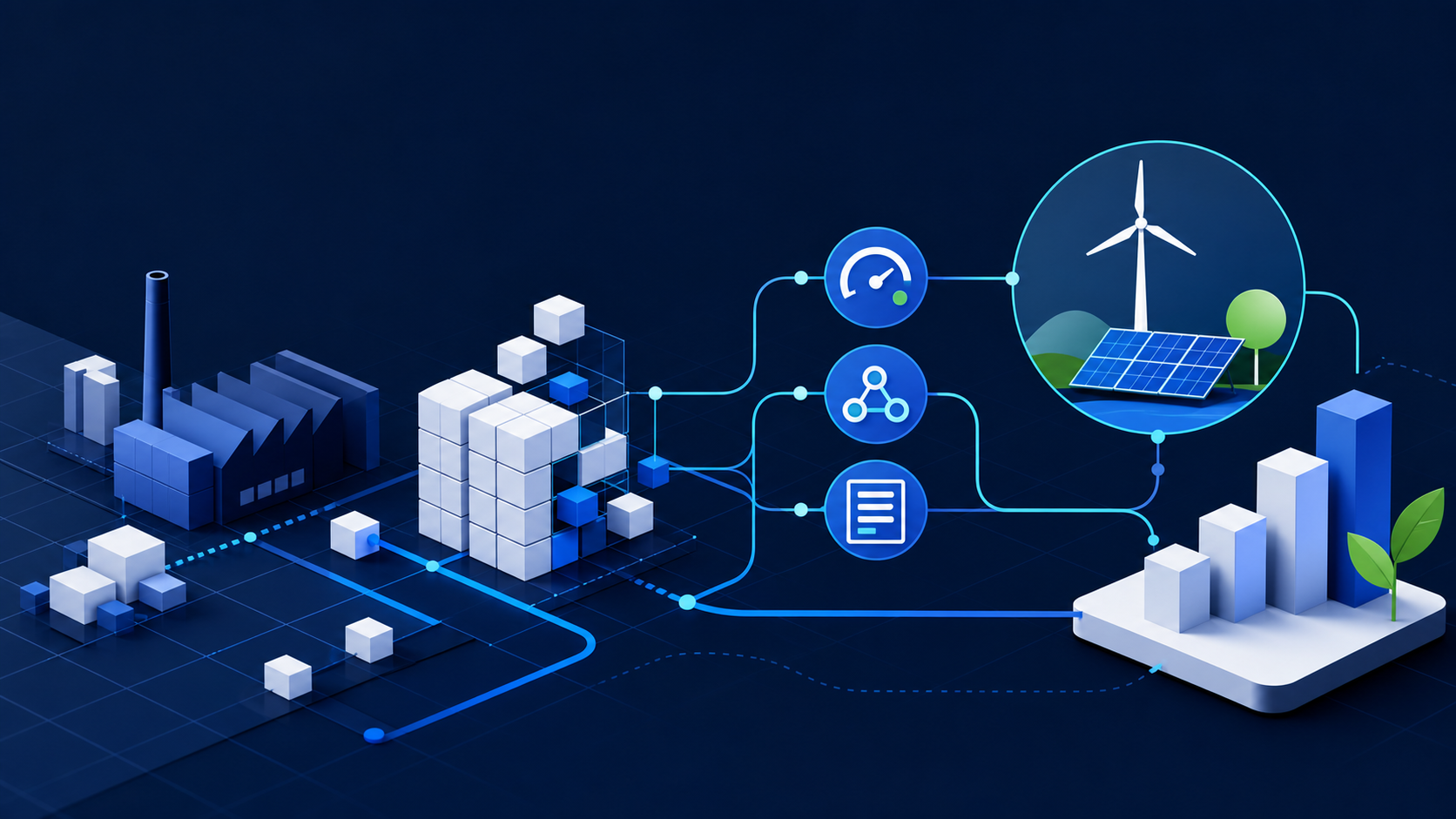
The GX Promotion Act is not only a law designed to advance decarbonization, but also a framework for reshaping Japan’s industrial structure, investment priorities, and approach to energy.
Even if your company is not directly subject to regulation at this stage, the impact may extend to areas such as customer and supplier requirements, energy costs, procurement standards, and information disclosure. That is why it is important to understand the direction of these systems now and organize the information and business processes your company will need.
A good first step is to start with manageable initiatives, such as visualizing energy consumption and confirming requests from business partners.
FAQ

Q1. Does the GX Promotion Act impose direct obligations on all companies?
The same obligations will not immediately apply to every company. However, companies may well be affected through supply chains and transaction requirements.
Q2. Are GX and energy conservation the same thing?
They are not exactly the same. Energy conservation is part of GX, but GX is a broader initiative that also includes investment, procurement, energy transition, and regulatory compliance.
Q3. Where should companies start?
It is easier to move forward by first understanding electricity and fuel usage, confirming the requirements of key business partners, and identifying potential areas for improvement.
Start a Consultation on GX and DX Initiatives
From assessing your current situation to implementing systems and improving operations, we work with you to design an approach that fits your company’s needs.
- We can help clarify issues in your current operations and data.
- You can design implementation steps that fit your organization’s structure.
- You can continue building a framework that remains easy to operate after implementation.
- You can use data to verify results and make ongoing improvements.
- You can start exploring AI and IoT applications in the areas where they are most needed.