Eight Key Benefits of Introducing AI: Disadvantages, Practical Considerations, and Concrete Examples Explained Clearly
Why AI Adoption Is Attracting Attention

Labor shortages, increasingly complex operations, and rising expectations for faster customer service are making many companies realize that their current ways of working are no longer sustainable. Tasks such as inquiry handling, document creation, data aggregation, forecasting, and quality checks are especially prone to dependence on individual employees' experience and workload, making them vulnerable to operational silos.
Against this backdrop, AI is attracting attention not merely as a trend, but as a practical way to improve operational efficiency and make decision-making factors more visible. However, introducing AI does not automatically produce results. It is important to understand not only the benefits, but also the risks and implementation requirements, and to use AI in a way that fits your company.
What is AI?
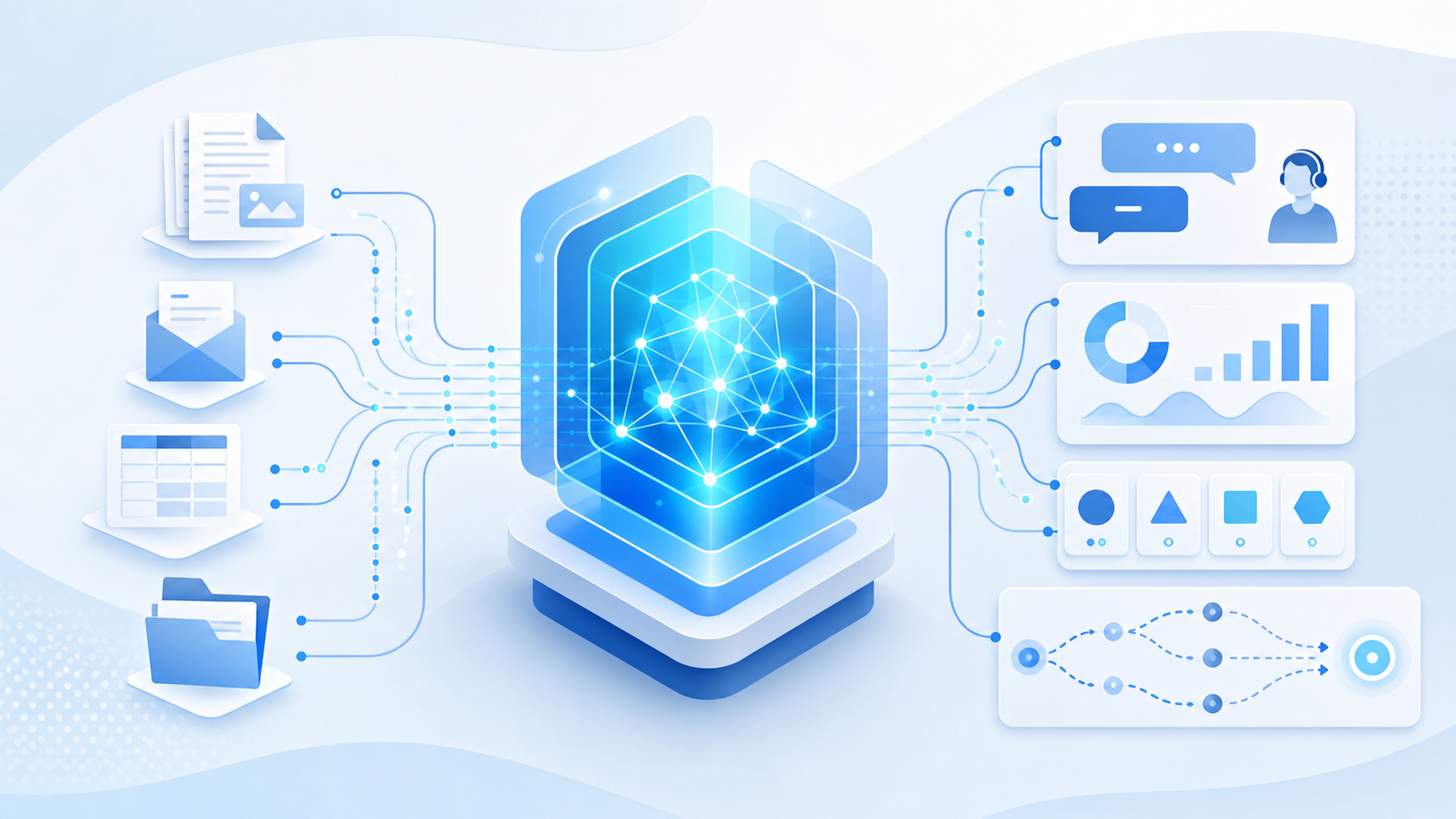
AI (Artificial Intelligence) is a general term for technologies that use computers to perform intelligent processes traditionally carried out by humans, such as recognition, classification, prediction, summarization, generation, and decision support.
In recent years, the use of generative AI, which can create text and images, has expanded alongside machine learning and deep learning. Using AI in business does not necessarily mean undertaking large-scale research and development. More companies are starting by embedding AI capabilities into existing workflows to reduce data entry work, automate initial responses to inquiries, and accelerate data analysis.
Eight Key Benefits of Introducing AI

1. Easier to reduce the burden caused by labor shortages
One of the major benefits of adopting AI is its ability to support or automate routine tasks that people currently perform manually. Examples include routing inquiries, summarizing meeting notes, checking forms and reports, and handling internal FAQ responses—tasks that are well suited to AI.
Even when hiring is difficult, it becomes easier to keep operations running while reducing the workload on existing team members, helping to ease pressure on frontline teams. This is especially practical for departments with large seasonal workload fluctuations, as they can maintain service quality even with a smaller team.
2. Easier to improve operational speed
AI can process tasks such as information retrieval, classification, summarization, drafting, and anomaly detection in a short amount of time. As a result, work that previously took tens of minutes to several hours can potentially be reduced to just a few minutes.
For example, AI can be especially effective in sales departments for drafting proposals and summarizing meeting minutes, in manufacturing departments for organizing inspection records, and in administrative departments for comparing and checking internal documents. Shortening work time can directly lead to reduced overtime or an increase in the number of cases handled.
3. Easier to reduce inconsistencies in work quality
Work performed by people can vary in quality due to differences in experience, understanding, and concentration. By using AI, companies can more easily standardize the initial quality of rule-based checks, classification, and draft content creation.
Of course, final checks still need to be performed by people, but simply standardizing the quality of the initial output can reduce the review workload. The benefits of standardization are likely to be especially clear in areas such as updating manuals, generating draft responses to inquiries, and checking items in contract documents.
4. Makes it easier to advance data analysis and forecasting
AI is highly effective at organizing large volumes of data and identifying correlations. It makes it easier to detect patterns that people may struggle to find on their own, such as sales trends, inventory fluctuations, inquiry details, and early signs of equipment abnormalities.
For example, demand forecasting can help reduce the risk of excess inventory or stockouts, while analysis of inquiry logs can reveal common customer frustrations. One major management benefit is that it becomes easier to shift decisions that once relied on intuition into discussions grounded in data.
5. Helps reduce human error
Errors such as transcription mistakes, data entry errors, missed confirmations, and oversights occur routinely in many companies. AI can be readily applied to rule-based matching, anomaly detection, and duplicate checks, helping identify mistakes at an early stage.
In areas such as billing, inventory management, quality records, and customer data organization, even a single mistake can have a significant impact on downstream processes. Using AI as a support tool makes it easier to identify issues in advance that staff may otherwise overlook.
6. Makes it easier to improve the quality of customer service
Using AI chatbots, FAQ support, and email draft generation can speed up the initial response to inquiries. They can also provide first-level reception around the clock and suggest similar cases, helping reduce customer wait times.
By using AI to organize past inquiry histories, companies can more easily see what customers are struggling with and where they are dropping off. These insights can support not only improvements in customer satisfaction, but also reviews of product explanations and support systems.
7. Helps employees focus on higher-priority work
AI is an effective way to reduce simple, repetitive tasks that do not need to be handled by people. This allows employees to spend more time on work that is difficult for AI to replace, such as customer support, improvement proposals, decision-making, handling exceptions, and coordinating across departments.
The value of introducing AI is not simply about reducing headcount. Rather, it lies in reallocating limited talent to higher-value work. This makes it easier for organizations to improve overall productivity.
8. Inspires ideas for new services and business process improvements
Introducing AI not only improves the efficiency of existing operations, but also makes it easier to explore new ways of delivering value. For example, companies can test on a small scale solutions that were previously difficult to implement because they required too much effort, such as internal knowledge search, sales support, automated report generation, and predictive equipment maintenance.
AI can also be used to review customer data and operational logs, helping identify where inefficiencies are concentrated and what may be causing missed sales opportunities. Another important benefit is that AI adoption can prompt a broader review of overall business processes.
Disadvantages and Key Considerations When Introducing AI

AI offers many benefits, but there are also important points to consider before implementation.
Information Leaks and Security Risks
When using generative AI or cloud-based AI services, it is essential to carefully check how the information you enter will be handled. Entering confidential information, personal data, or non-public information without proper consideration may create information governance risks.
For this reason, it is important to establish usage rules, classify input data, manage access permissions, and define log review procedures in advance.
Issues such as incorrect outputs or unclear sources
Even when AI produces content that appears plausible, it may include factual errors or answers that lack sufficient evidence. In areas such as legal affairs, healthcare, finance, contracts, and external communications, using AI output as-is can be risky.
The basic principle is to use AI not as a replacement for human judgment, but as a tool to support it. For important use cases, it is essential to keep a human review process in place.
Implementation Costs and Operational Burden
AI involves costs and effort not only during implementation, but also during ongoing operation. Companies need to consider tool usage fees, data preparation, system integration, training, performance measurement, and continuous improvement work.
If you expand all at once instead of starting small, it can be difficult to see whether the results justify the cost. A practical approach is to begin with a PoC or a limited department.
Challenges in Internal Adoption
Even a useful tool will not be adopted if it does not fit day-to-day operations. If it is unclear why the tool is being used or whose workload it is meant to reduce and how, it is likely to be abandoned after implementation.
The key to successful adoption is to involve frontline staff from an early stage, define the target processes in concrete terms, and clarify how the technology will be used.
AI Use Cases That Are Likely to Deliver Results
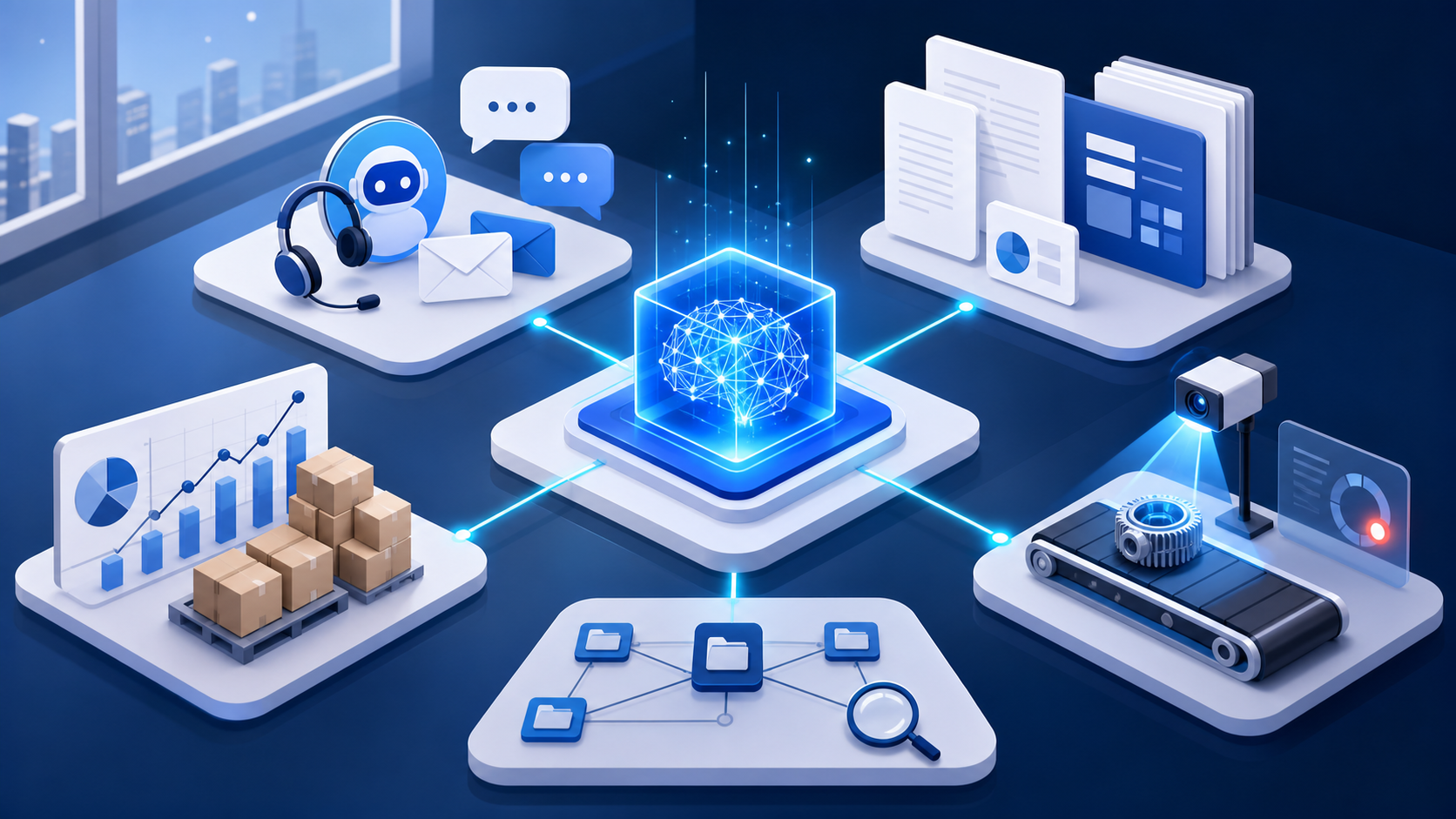
Customer Inquiry Support
Chatbots and email draft support can help reduce the time required for initial responses. These solutions are especially easy to introduce in operations that handle many frequently asked questions.
Document Drafting and Summarization
It is well suited to supporting the creation of meeting minutes, proposal drafts, report summaries, and manual update plans, reducing the burden of writing from scratch.
Demand forecasting and inventory optimization
Improving forecast accuracy based on sales history and seasonal factors can help reduce excess inventory and stockouts.
Quality Control and Anomaly Detection
In manufacturing and maintenance settings, AI can be used with image recognition and log analysis to detect early signs of abnormalities.
Using Internal Knowledge
Making it easier to search across internal policies, past materials, and FAQs can support new employee training and help reduce the number of inquiries.
How to Successfully Implement AI

1. Clarify the issues first
Rather than choosing a tool first, start by identifying which tasks take the most time and where errors tend to occur. The clearer the objective, the easier it is to measure the impact of implementation.
2. Start with a narrowly defined task
Rather than aiming for a company-wide rollout from the start, it is less risky to begin with tasks where results are easy to see, such as inquiry classification, meeting minutes summarization, and form checking.
3. Define the rules and areas of responsibility
Clearly define what information may be entered, which use cases require review, who has final approval authority, and what rules apply to data storage. Governance design is essential when using AI.
4. Measure effectiveness
Set metrics that can be compared before and after implementation, such as work time, number of cases handled, number of errors, and satisfaction levels. Quantitative evaluation makes it easier to decide on the next stage of deployment.
5. Improve the process to fit on-site operations
AI implementation should not be treated as a one-time setup. It is important to continually refine prompts, organize data, adjust the UI, and review operations so the solution evolves into a practical fit for day-to-day work.
How SMILE Can Help

At Smile, we do not treat AI adoption as an end in itself. Instead, we provide step-by-step support tailored to on-site business challenges, from defining the scope of implementation and reviewing workflows to integrating the necessary systems and designing operations.
For example, we can propose approaches that avoid placing too much burden on frontline teams, such as using internal documents more effectively, improving inquiry handling, reducing data entry work, or applying AI in coordination with existing systems. AI initiatives are more likely to succeed when companies start small, test practical use cases, and find the approach that best fits their organization.
Conclusion

Introducing AI offers many benefits, such as reducing the burden caused by labor shortages, accelerating business processes, standardizing quality, and making more advanced use of data. At the same time, companies need to consider issues such as information management, inaccurate responses, operating costs, and internal adoption.
The key is not to view AI as a universal solution, but to position it as a tool for solving your company’s specific business challenges. A practical approach is to start with a focused use case, implement it on a small scale, and expand gradually while confirming its impact.
SMILE supports phased implementation, from organizing business challenges and evaluating systemization to development and operation.
Companies considering DX or the use of AI should start with small operational improvements.
FAQ

Q1. Is AI implementation difficult unless you are a large company?
No. Today, many cloud-based services are available, making it easier for small and medium-sized enterprises to start on a small scale. What matters most is not the size of the budget, but choosing the right business processes to target.
Q2. What is the difference between generative AI and traditional AI?
Generative AI is well suited to creating text, images, summaries, and drafts, while traditional AI tends to be stronger for specific purposes such as prediction, classification, and anomaly detection. The right solution should be selected based on the intended use.
Q3. Will AI deliver results immediately after implementation?
It depends on the type of work. For routine tasks, results are often visible relatively quickly, while cases that require internal data preparation or operational redesign tend to take more time.
Q4. What should companies pay particular attention to when using AI?
Key points include handling confidential information appropriately, reviewing output content, and clarifying the scope of responsibility. Human review should always be retained, especially for external documents and important decisions.
Start a Consultation on GX and DX Initiatives
From assessing your current situation to implementing systems and improving operations, we work with you to design an approach that fits your company’s needs.
- We can help clarify issues in your current operations and data.
- You can design implementation steps that fit your organization’s structure.
- You can continue building a framework that remains easy to operate after implementation.
- You can use data to verify results and make ongoing improvements.
- You can start exploring AI and IoT applications in the areas where they are most needed.