Successful DX Case Studies for Small and Medium-Sized Businesses
In recent years, DX (digital transformation) initiatives have steadily expanded among the small and medium-sized enterprises that support Japanese industry. Many companies are achieving major results by improving operational efficiency and increasing added value, even with limited personnel and budgets.
This article introduces successful examples of DX among small and medium-sized enterprises and explains the challenges companies commonly face when promoting DX, as well as the benefits that can follow. It offers practical insights for companies considering DX initiatives.
Seven Successful DX Case Studies for Small and Medium-Sized Businesses
This section introduces representative examples of successful DX initiatives at small and medium-sized enterprises. Drawing also on cases from the Ministry of Economy, Trade and Industry’s “DX Selection 2023,” we look at the specific efforts that have delivered tangible results.
Company A
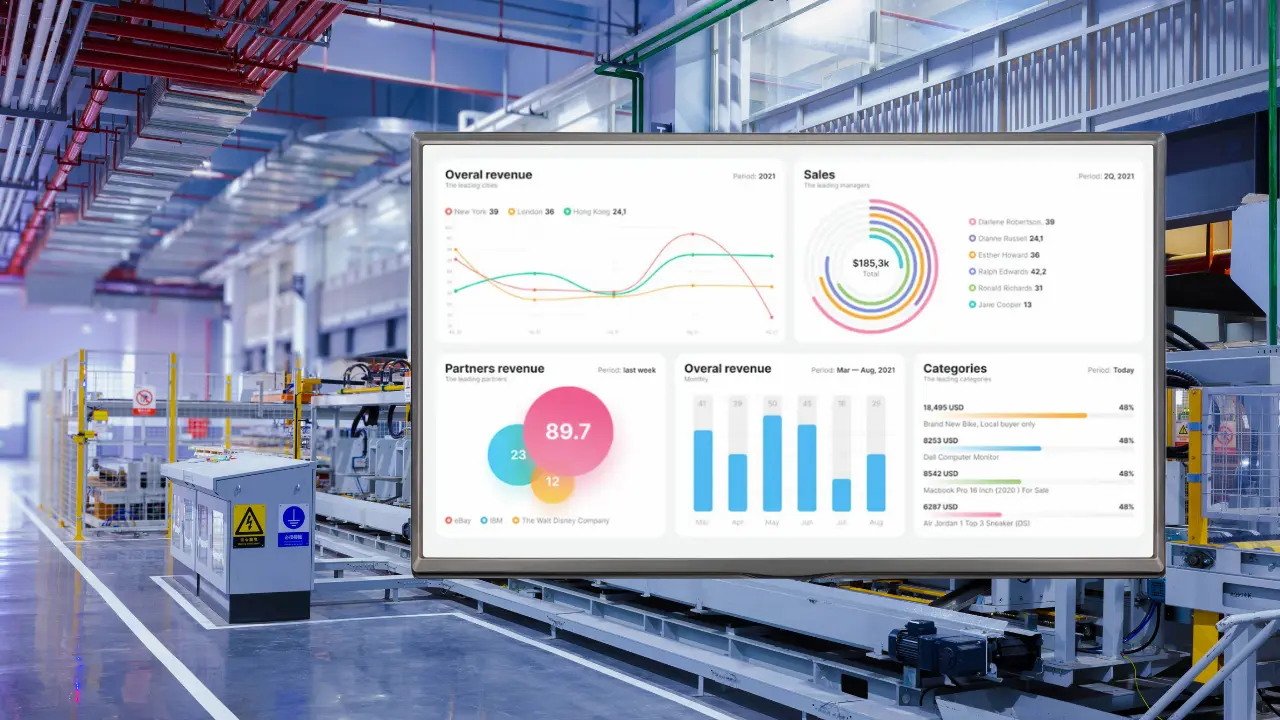
Drive DX quickly under in-house leadership without relying on external outsourcing
Company A provides machinery and plant solutions for producers of fermented foods and beverages such as soy sauce, miso, and sake.
To improve operational efficiency and advance the visualization and use of data, the company created a digitalization roadmap and established a cross-functional DX promotion committee. As a result, employees became more motivated to build their IT skills, and the company put in place a framework for developing and assigning digital talent internally. This enabled it to drive DX on its own initiative while minimizing reliance on external providers.
In addition, the company introduced 21 systems and tools over three years, achieving a range of results such as improved business processes, real-time data visualization, and reduced paper-based work. This rapid execution was highly recognized, earning the company the Grand Prize in “DX Selection 2023.”
Company B
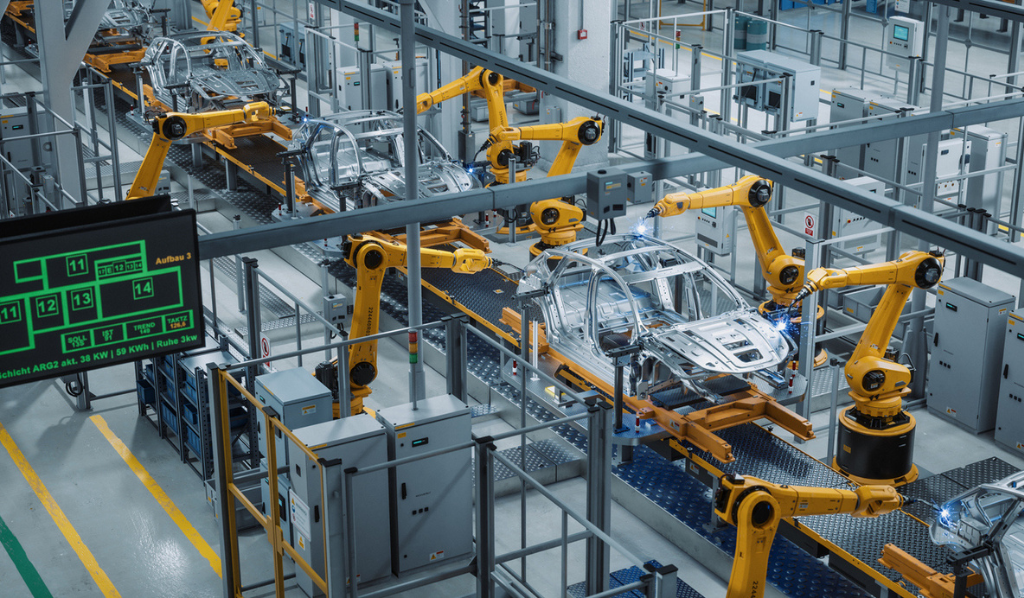
Achieving Both Labor Savings and Stable Operations Through DX
Company B manufactures plastic products in Gunma Prefecture.
The company developed its own production management system that operates 24 hours a day, 365 days a year, automating material receiving and issuing as well as product removal processes. By centrally managing everything from raw material receipt to production and shipment in a single system, it helps prevent human error, maintain consistent quality, and ensure safety.
These labor-saving measures reduced wasted working time and helped lower personnel and operating costs. As a case study that successfully balanced workstyle reform with continuous operations, the initiative was selected as the runner-up Grand Prix winner in the DX Selection 2023.
Company C
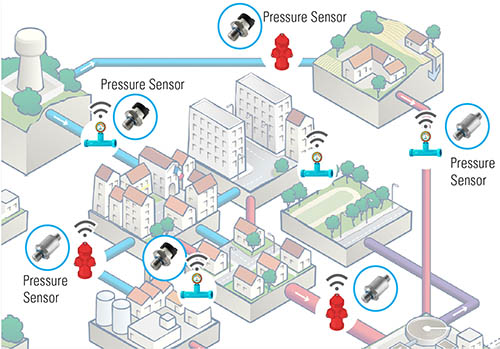
Achieving “add-on DX” by leveraging existing technologies
Kobata Gauge Manufacturing, which produces control instruments such as pressure measurement devices, leveraged its proprietary measurement technologies to develop a retrofit IoT sensor unit that can digitalize existing mechanical instruments.
Factory sites have long faced challenges when inspecting conventional mechanical instruments, including safety risks and reading errors. The company developed its products around the concept of making them easy for anyone to implement while continuing to use existing equipment as is, enabling remote monitoring and visualization.
For many small and medium-sized enterprises, advancing DX without replacing existing equipment is a practical and effective approach.
Company D
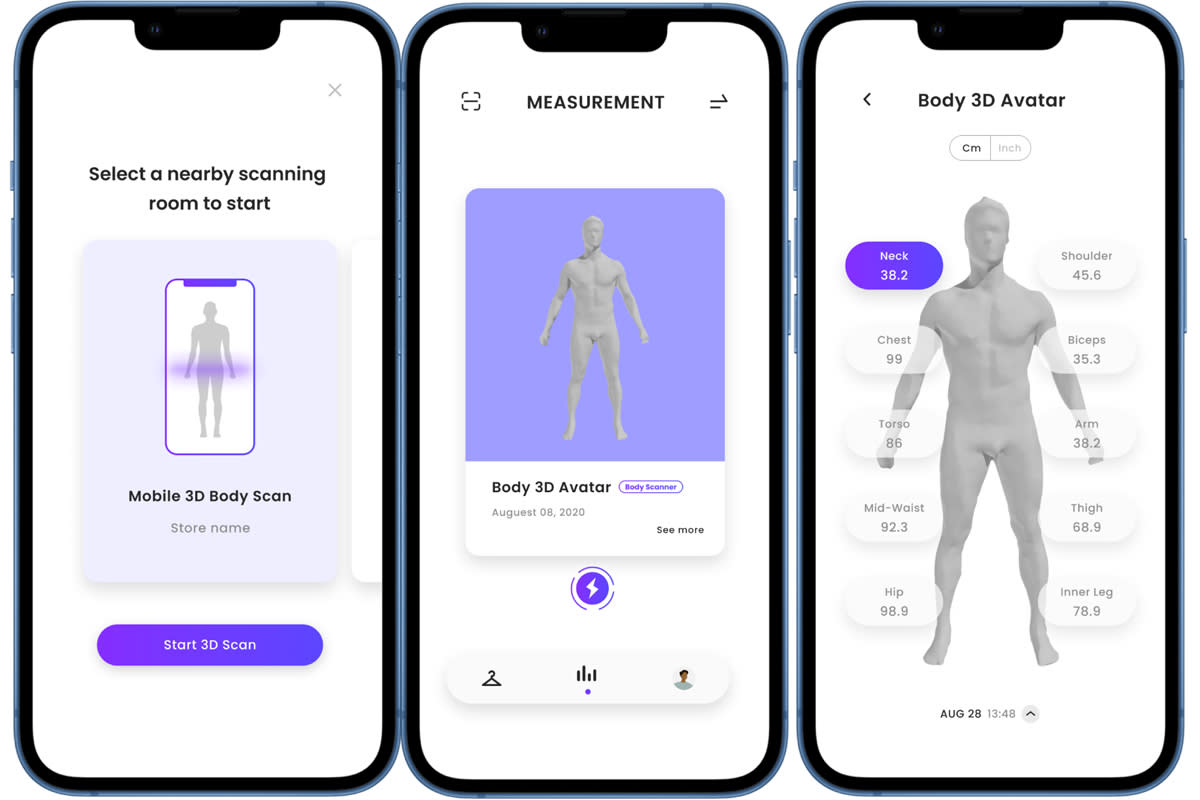
Reducing unnecessary orders with a proprietary AI engine
Company D provides AI×R Tailor, a service that recommends the appropriate uniform size based on images and basic information.
Users simply enter image data, height, weight, age, and other information in the web app, and AI analyzes their body measurements to recommend the optimal size. This system helps reduce excess inventory, ordering errors, and waste, while improving operational efficiency and optimizing costs.
Another major benefit is that there is no need to set aside time or space for measurements, reducing the burden on frontline teams.
Company E

Using the cloud to make management metrics visible
Company E manufactures confectionery products and sells them through its directly operated stores.
Previously, it took time to understand figures related to inventory and ordering. The company introduced a cloud-based core system that manages sales and production in an integrated way. By also combining it with BI tools and a cloud-based POS register, the company can visualize data such as sales, billing, and purchasing, enabling faster management decisions.
As a result, the solution not only improves operational efficiency but also helps reduce costs by minimizing inventory losses. Another key feature is the use of cloud services, which enables a smooth process from implementation through the start of operations.
Company F
Leveraging in-house development experience to expand DX across the entire region
Drawing on its own experience in improving business operations, Company F developed an in-house information management system for hotels and traditional Japanese inns.
Building on that expertise, the company offers Satoyama Connect, a regional tourism DX platform. It centralizes information on accommodations, restaurants, activities, and more, creating a system that supports everything from reservations and sales to data analysis.
This made it possible for the entire region to create customer touchpoints and use tourist behavior data to develop visitor-attraction initiatives and new event plans. It is a strong example of DX extending beyond a single company to enhance the value of the whole region.
Company G
Using the Cloud to Reduce On-Site Workloads and Improve Administrative Operations
Company G, which operates taxi and automotive maintenance businesses, faced challenges in its sightseeing taxi business due to overreliance on individual employees and inefficient labor management.
To address this, the company developed a web-based business management system that allows schedules and daily reports to be entered and submitted in the cloud. As a result, it not only reduced the burden on drivers who are not stationed at the office, but also improved the efficiency of sales calculations and administrative operations.
This case demonstrates how the company improved both frontline working conditions and back-office operations at the same time.
Challenges in Advancing DX for Small and Medium-Sized Businesses

Small and medium-sized enterprises are often more cautious than large companies when it comes to advancing DX. This is due to challenges such as the following.
The company has few employees with in-house IT and digital expertise
Many small and medium-sized businesses lack dedicated IT staff or talent to drive DX initiatives. As a result, they often struggle to know where to start, making it difficult to move their efforts forward.
The budget available for system investments is limited
Large-scale system implementations require upfront investment and ongoing operating costs. With limited budgets, it can be difficult to assess return on investment, which may delay decisions on whether to proceed.
Difficulty changing existing corporate culture and business practices
When long-standing practices or workflows that depend on specific individuals have become entrenched, resistance to new systems often arises. Because DX involves not only adopting technology but also changing organizations and ways of working, companies need to overcome this barrier.
The benefits of advancing DX for small and medium-sized enterprises
While these challenges exist, small and medium-sized enterprises are often well positioned to see the benefits of DX more directly.
Strengthen organizational capabilities through talent development
Precisely because IT talent is in short supply, gradually developing talent within your organization can lead to significant transformation. When employees acquire new technologies and ways of thinking, it directly strengthens the competitiveness of the entire company.
Cloud Adoption Helps Keep Initial Costs Low
In recent years, a wide range of cloud services has become available at relatively low cost. As a result, companies can now improve operations and enhance information sharing without making major capital investments.
Reduce dependence on individual employees and make it easier to pass on technical skills and know-how
By preserving analog workflows and individual-dependent know-how as data, companies can make it easier to transfer knowledge to successors. This is a major advantage for small and medium-sized enterprises, which often face labor shortages and business succession challenges.
Respond more quickly to change
Because small and medium-sized businesses tend to have relatively compact organizations, they have the advantage of being able to make decisions and execute quickly. By starting small and improving rapidly, they are well positioned to see the benefits of DX.
Conclusion
In this article, we introduced seven successful DX case studies from small and medium-sized enterprises and explained the challenges and benefits of driving DX initiatives.
DX for small and medium-sized businesses does not necessarily need to begin with major system investments. Identifying small issues on the front lines, reviewing existing workflows, and making incremental improvements can all lead to significant transformation.
Even with limited personnel and budgets, companies can significantly improve operational efficiency and create new value by clarifying their objectives and using digital technologies in ways that suit their business.
For companies beginning their DX journey, it is important to first identify familiar, immediate challenges and make steady progress through a small-scale start. That first step can lead to sustainable growth and stronger competitiveness in the future.
Drawing on extensive project experience with Japanese companies, Smile provides end-to-end DX support services, from requirements definition through design, development, and operations.
In particular, the company has strengths in the following areas.
- Modernization of business systems (legacy system renewal)
- Cloud migration and system optimization
- Web and mobile application development
- Improving Business Operations Through the Use of AI and Data
In addition, a BrSE/PM structure with Japanese-language support enables smooth communication with customers and high-quality delivery.
We focus on practical DX that understands real on-site challenges and can be effectively implemented, helping our clients achieve sustainable growth.
If you have any questions or challenges related to DX, please feel free to contact us.
If you have any questions or challenges related to DX, please feel free to contact us.
We focus on practical DX that understands real on-site challenges and can be effectively implemented, helping our clients achieve sustainable growth.
- Modernization of business systems (legacy system renewal)
- Cloud migration and system optimization
- Web and mobile application development
- Improving Business Operations Through the Use of AI and Data